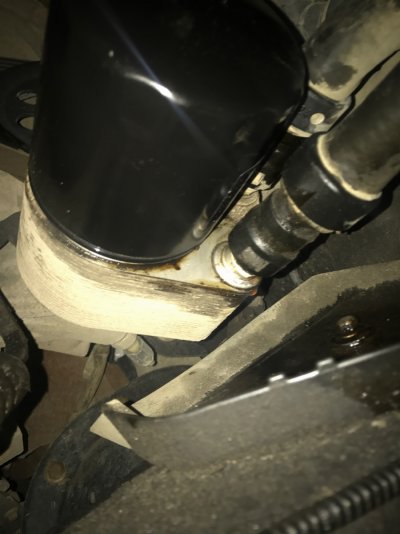
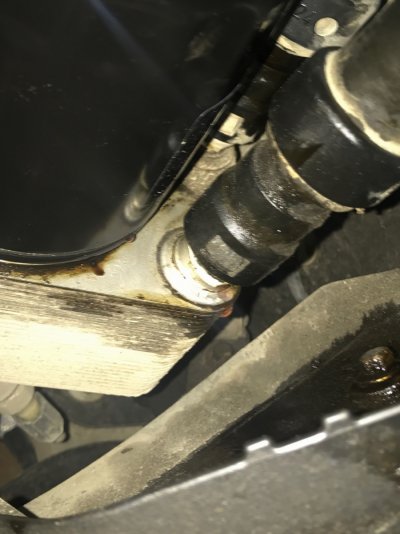
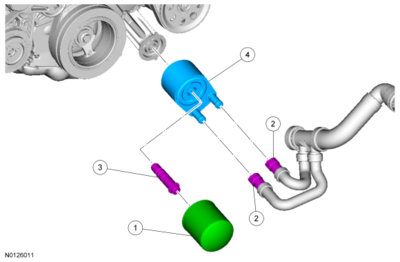
@Ruger "That's an oil cooler? I've wondered if that was its intended function. Damn small cooling fins if it's an oil cooler. Does it perform another function, maybe?"
==============================================================
It is to help bring the oil up to temp faster and then provide "cooling" so to speak, by being a somewhat lower temperature if the engine is working.
My thought is to block it off (6.2L - no turbo) and let the engine oil warm up and cool down like it did before the EPA put standards on "Cold-Start Emissions Control" (see this section in this article:
https://nap.nationalacademies.org/read/11586/chapter/6#125). All vehicles started getting these "coolers" around the beginning of the 2010's to meet the EPA requirements, and is needed for turbo'd vehicles to keep the oil life reasonable.
While not mentioned specifically in the article, I've done some research on this and found these "coolers" really aren't truly "coolers" at all IF they use the existing engine radiator as their source for expelling heat. They function more as equalizers of temperature differences between the two different fluids and the ΔT.
While a turbo-charged vehicle absolutely needs it's "oil cooler" to get rid of excessive heat, a cooler "cooling fluid" would dissipate heat faster due to greater ΔT.
If you want a true cooler, then you can run a aftermarket transmission cooler (separate from all the other coolers and as a complete separate system) and plumb it into the oil "cooler" to truly dissipate heat from the engine oil.
Shoot, if you are worried about cross-contamination of fluids, you could just use a 0W-16 oil, or whatever, in the lines as your "coolant" to transfer the heat to the newly mounted transmission cooler to get rid of the excess heat. Use a small pump (motorcycle exteranl pump) or one like this:
https://www.amazon.com/dp/B0B849K51V/?tag=fordraptorforum-20 to move the fluid - could even put an in-line temperature control so it only engages when the oil is hot (or use a switch to turn it on when you want to).
If anyone gets bored, here's the EPA reg's on that:
This page provides links to the appropriate regulatory citations and includes published information related to the test procedures.

www.epa.gov
And if you are an SAE member: